Best Bike & Scooty Training Institute in Islamabad & Rawalpindi
Best Bike & Scooty Training Institute in Islamabad & Rawalpindi
June 13, 2026
Two-Wheeler Training School and Safe Riding Courses
Learning to ride a two-wheeler is all about shifting your mindset from passive passenger to active balancer. Whether you are aiming to kick-shift a classic CD-70 or twist-and-go on a sleek scooty, the physics of balance remain the same, but the controls and road strategies change completely.
Here is an expanded, practical guide to mastering both.
1. Bike Control Basics (The CD-70 Guidelines)
The standard lightweight commuter bike (like a Honda CD-70) is the ultimate training tool because its mechanical layout is incredibly transparent.
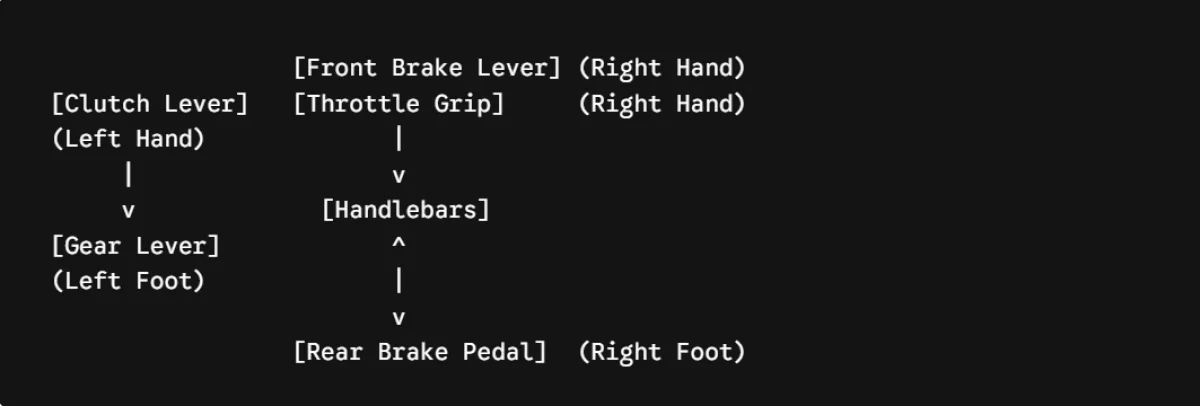
Unlike a car, your controls are split across all four limbs:
Right Hand: Front brake lever and twist-throttle.
Right Foot: Rear brake pedal.
Left Hand: Clutch lever.
Left Foot: Gear shift lever.
[Front Brake Lever] (Right Hand) [Clutch Lever] [Throttle Grip] (Right Hand) (Left Hand) | | v v [Handlebars] [Gear Lever] ^ (Left Foot) | v [Rear Brake Pedal] (Right Foot)
The "Four-Down" Gear Pattern
Most lightweight commuter bikes use a "all-down" or "all-up" shift pattern. On a standard CD-70, clicking the lever down shifts you up from Neutral $\rightarrow$ 1st $\rightarrow$ 2nd $\rightarrow$ 3rd $\rightarrow$ 4th gear.
The critical skill is the friction zone—the area of clutch lever travel where power starts transferring to the rear wheel. Beginners often drop the clutch instantly, causing the bike to jerk forward and stall. You must smoothly feed the throttle while gently easing the clutch out over a count of three.
2. The Step-by-Step Balance Progression
Don't start the engine on day one. True balance is built through a gradual mechanical progression.
1.The Flintstone Walk (Engine Off): 15-20 mins.
Sit on the bike with your feet flat on the ground. Keep the engine off and the bike in neutral. Use your legs to push yourself forward in a straight line, keeping your eyes up (never look down at the front tire). Get used to the static weight of the machine.
2.The Downhill Coast (Engine Off): 20 mins.
Find a very gentle, quiet incline. Lift your feet just two inches off the ground and let gravity coast you down. Practice using only your brakes to bring yourself to a smooth, controlled stop without tipping over.
3.Power Walking (Engine On): 30 mins.
Start the engine. Put the bike in 1st gear. Slowly let the clutch out until the bike begins to pull itself forward. Keep both feet on the ground, "walking" with the bike using only the engine's idling power. Do not touch the throttle yet.
4.Feet Up and Feet Down: Ongoing.
Once power walking feels stable, add a touch of throttle, bring your feet up onto the pegs, and ride in a straight line. When stopping, pull the clutch in completely, apply both brakes smoothly, and drop your left foot to the ground just before the bike comes to a dead stop.
Transitioning to a scooty changes your physical posture and your control layout entirely.
No Clutch, No Gears: Scooties use a CVT (Continuously Variable Transmission). There is no clutch lever or foot shifter. You simply twist the throttle to go and release it to slow down.
Bicycle-Style Braking: Both brakes are on the handlebars. Your right hand controls the front brake, and your left hand controls the rear brake.
The Center of Gravity Shift: On a bike, you grip a heavy fuel tank between your knees, which gives you immense stability and leverage. A scooty has a "step-through" frame with a floorboard. Because your knees are together and your feet are flat, the machine's center of gravity sits much lower and further back. This makes the steering feel incredibly light and "twitchy" at low speeds compared to a motorcycle.
4. Common Beginner Mistakes (And How to Fix Them)
Target Fixation: Beginners naturally look exactly where they are afraid of crashing (a curb, a pothole, or a wall). Because a two-wheeler naturally goes where your eyes look, you will ride right into the hazard. The Fix: Turn your entire head and look toward your escape route or the open space.
The "Death Grip" Throttle Panic: When panicked, beginners often clamp down tightly on the handlebars. Because your hand wraps around the throttle, clamping down accidentally twists the throttle wide open, causing the bike to launch forward. The Fix: Cover your front brake lever with two fingers at all times. If you panic, your fingers naturally pull back, shutting the throttle off as you squeeze the brake.
Over-relying on the Front Brake in Turns: Squeezing the front brake hard while the handlebars are turned causes the front tire to instantly lose traction and tuck under, dropping the bike sideways. The Fix: Do all your heavy braking in a straight line before you turn. If you must slow down mid-turn, gently use the rear brake only.
5. Safety: Helmets and Road Strategy
Helmet Selection: The Non-Negotiables
Never buy an unrated "half-cap" or plastic novelty helmet. Look for a certified Full-Face Helmet carrying at least a DOT or ECE rating stamped on the back. A full-face helmet protects your chin and jaw, which statistically take more than 35% of all impacts in a motorcycle accident. It should fit snugly enough that shaking your head doesn't cause the helmet to shift independently of your skin.
High-Risk Urban Scenarios
When riding a motorcycle or scooty, you are practically invisible to larger vehicles. Two specific areas cause the majority of two-wheeler accidents:
Danger Zone
The Risk
The Defensive Strategy
The Blind-Spot Lane Split
Riding alongside the rear doors or quarters of a car or truck where their side mirrors cannot see you.
Never linger. Either accelerate safely past their front bumper or drop back so you are directly in their rear-view vision.
The Turning Left-Hook
An oncoming car turns across your lane at an intersection because they misjudged your speed or didn't see your narrow profile.
Flash and decelerate. Flash your high beams, cover your brakes, and slow down before entering the intersection, assuming they will pull out in front of you.
Our Reviews
5 reviews from our
students
AV
A.Ayesha Vlogs
“
I have taken admission in King Driving School and had a very great experience! My instructor, Mam Sadaf, guided me very well and helped build my confidence. She made me feel comfortable, and her friendly nature made the learning process enjoyable. I highly recommend her!
NS
Nida Sadiq
“
I had a great experience learning to drive with Mam Seema. She is very nice, humble, and professional. Her teaching style is encouraging and clear, making me a more confident driver. I highly recommend her as an instructor.
HL
Hana Lee
“
I took a five-day driving lesson course with Ma’am Sadaf. I had never driven before, but thanks to her, I gained a lot of confidence in my driving. She made sure I was calm throughout my lessons and consistently checked up on me. I am very grateful for this opportunity.
SJ
Soha Jehangir
“
I had the pleasure of learning driving from Miss Seema. She is incredibly patient and professional. Her dedication is extremely appreciable, and I can safely say she has instilled confidence in me to become a great driver. I highly recommend her for a calm and smooth learning experience.
AA
Anooshay Abbasi
“
I have had a great experience at King Driving School. My instructor, Mrs. Sajida, is honestly a very good teacher with a lot of patience. She has never shouted or shown any attitude. Thanks to her, I passed my exam on the first attempt and truly enjoyed the entire learning experience.